


Humanoid Robots Are Coming to Airports: They Will Help Handle Baggage in Japan
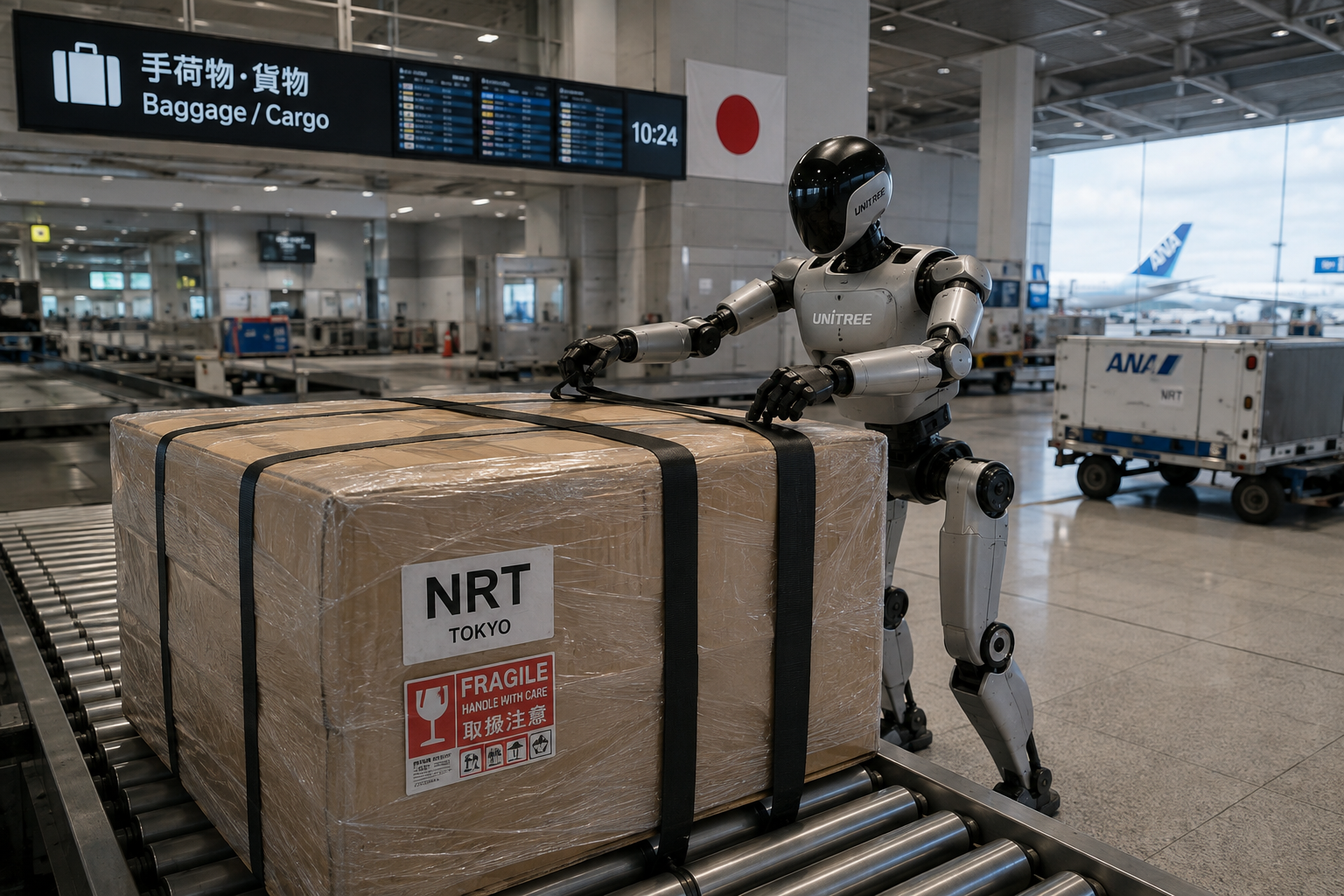
Japan is once again among the countries bringing humanoid robots into real-world workplaces. Japan Airlines (JAL) has launched a pilot project at Tokyo’s Haneda Airport, where humanoid robots will assist with baggage and cargo handling.
The main reason for introducing these robots is not just technological progress but also the growing labor shortage. For years, Japan has faced an aging population and a shrinking workforce, while at the same time experiencing record growth in tourism. As a result, physically demanding jobs at airports are becoming increasingly difficult to fill.
Robots as Assistants, Not Replacements
The pilot project uses humanoid robots manufactured by the Chinese company Unitree. Standing approximately 130 centimeters (4.3 feet) tall, the robots will be responsible for moving baggage and cargo around the airport apron and assisting with other physically demanding tasks.
Japan Airlines emphasizes that the robots are not intended to replace employees. Critical responsibilities related to safety, work coordination, and supervision will remain in human hands. Instead, the robots are designed to reduce the physical strain on workers while improving operational efficiency.
Pilot Program Running Through 2028
The trial will continue until 2028, during which researchers and airport staff will evaluate how well the robots perform in a real airport environment. In addition to baggage handling, Japan Airlines is also exploring their potential use for cleaning aircraft cabins and carrying out other support tasks.
Currently, the robots can operate for approximately two to three hours on a single battery charge, meaning their deployment still requires careful planning and close collaboration with human workers.
Where Is Humanoid Robotics Headed?
The Haneda Airport project is another sign that humanoid robots are rapidly moving from research laboratories into real industrial applications. Although the technology is still in its early stages of large-scale deployment, many companies are exploring where robots can take over repetitive, physically demanding, or difficult-to-staff tasks.
Airports are among the most challenging environments for testing this technology, making the success of the Japanese pilot project an important indicator of how quickly humanoid robots could become part of everyday operations across a wide range of industries.
Source:
The Guardian. Humanoid robots to become baggage handlers in Japan airport experiment.
