


Robotics in 2026: 7 Trends That Will Shape the Future
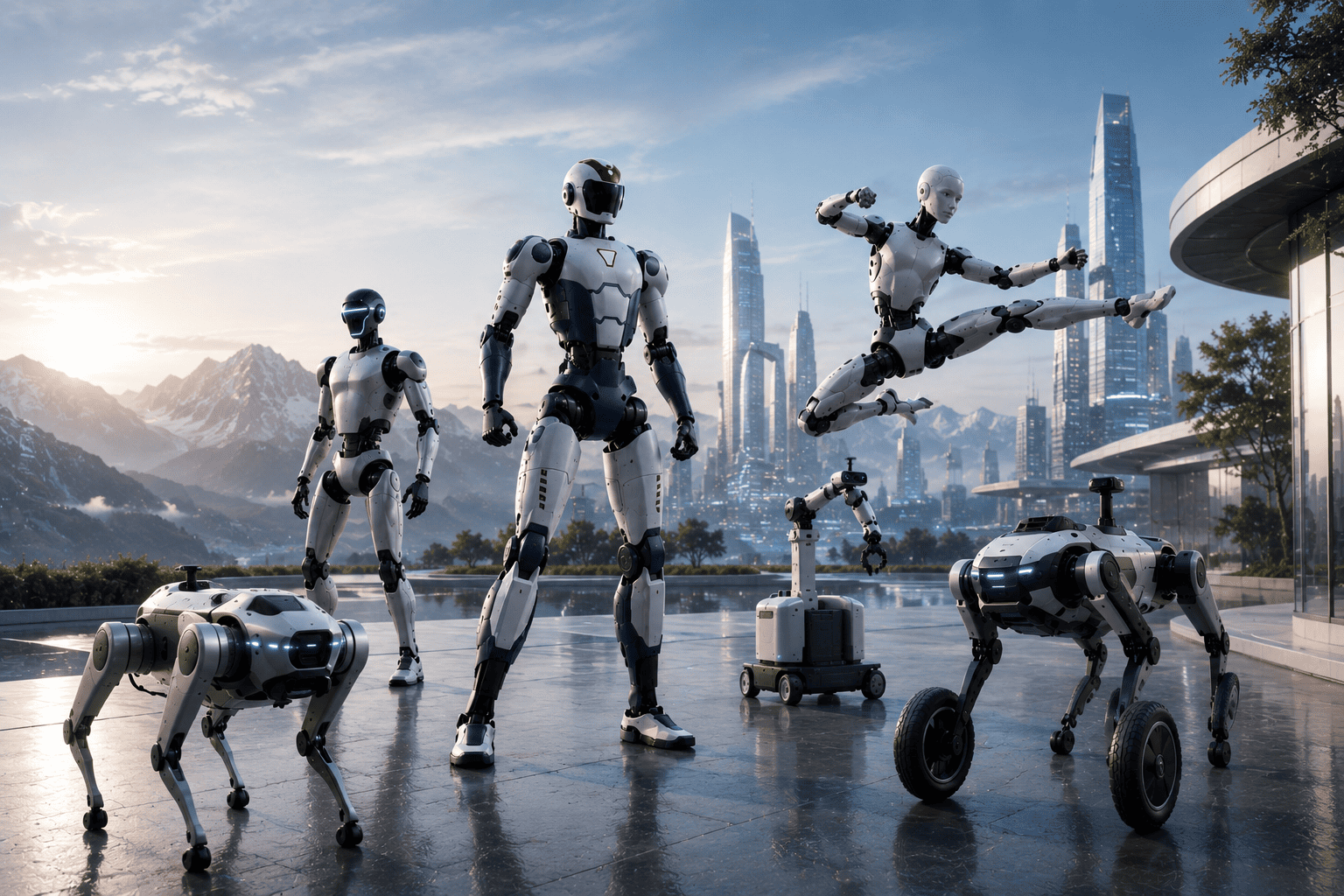
Robotics is experiencing one of the biggest turning points in its history in 2026. While robots were primarily designed to automate individual manufacturing tasks just a few years ago, they are now becoming intelligent collaborators capable of understanding their surroundings, making decisions, and working alongside people. Advances in artificial intelligence have accelerated the development of robotics faster than ever before.
Below are the most important trends currently shaping the global robotics industry.
1. Humanoid Robots Are Moving from Prototypes to Real-World Applications
Humanoid robots continue to attract the greatest attention. Leading technology companies are developing robots capable of performing tasks in manufacturing, logistics, warehouses, retail, and even service industries.
The year 2026 marks an important milestone as many manufacturers prepare for large-scale production of humanoid robots. Rather than being limited to demonstrations at trade fairs, these robots are already carrying out real industrial tasks, assisting with repetitive and physically demanding work.
At Plan-net Robot, we are already witnessing this transformation in practice by providing Slovenian companies with access to state-of-the-art humanoid robots such as the Unitree G1 and Unitree H1.
2. The Era of Physical AI Has Arrived
The new generation of robots is no longer defined solely by mechanical capabilities but increasingly by artificial intelligence.
The industry is rapidly embracing the concept of Physical AI—the integration of artificial intelligence with the physical world. Instead of simply following predefined programs, robots can perceive their environment, understand situations, plan their next actions, and continuously adapt to changing conditions.
This is what makes modern robots significantly more effective in dynamic environments where conditions are constantly evolving.
3. Industrial Robots Are Becoming Intelligent Co-workers
For decades, traditional industrial robots were designed to perform only a single repetitive task.
Today’s robots, however, leverage advanced AI models that enable object recognition, autonomous task adaptation, and safe collaboration with human workers—often without the need for complex programming.
As a result, companies can implement automation much more quickly, even in manufacturing environments where production processes change frequently.
4. Robots Are Gaining Increasingly Dexterous Hands
One of the greatest challenges in robotics has long been developing robotic hands capable of performing delicate, everyday tasks.
Recent technological advances have made remarkable progress. Today’s humanoid robots can grasp very small objects, operate tools, connect electrical components, and perform delicate manipulation tasks that until recently could only be carried out by humans.
5. Labour Shortages Are Accelerating Automation
An ageing population and a growing shortage of skilled workers have become major drivers behind the rapid adoption of robotics.
Many companies are introducing robots because they struggle to recruit enough employees for physically demanding or repetitive jobs. This trend is particularly evident in manufacturing, logistics, healthcare, and elderly care.
Robotics is increasingly becoming the answer to the demographic challenges of the coming decades.
6. Robotics Is Becoming Accessible to Small and Medium-Sized Businesses
Advanced robotics is no longer reserved for the world’s largest corporations.
Lower hardware costs, standardized software platforms, and rapid advances in artificial intelligence are making robotic solutions increasingly affordable for small and medium-sized enterprises.
This means that robotics will continue expanding across a growing number of manufacturing and service industries over the coming years.
Models such as the Unitree Go2 and Unitree B2 demonstrate that cutting-edge robotics is no longer a multi-million-euro investment but a solution that can deliver a rapid return on investment. At Plan-net Robot, we integrate these technologies according to each customer’s specific business needs.
7. The Future Will Be Built on Human–Robot Collaboration
Despite many predictions, robots will not replace people entirely.
Industry experts agree that the future will be defined by collaboration between humans and robots. Robots will take over routine, repetitive, and physically demanding tasks, while people will continue to focus on decision-making, creativity, supervision, and communication.
This makes employee training and the safe integration of robots into everyday business processes just as important as technological development itself.
Looking Ahead
In 2026, robotics is no longer a technology of the future—it has become part of today’s reality. Humanoid robots, advanced artificial intelligence, and increasing automation will fundamentally transform the way we work across manufacturing, logistics, healthcare, services, and many other industries.
Companies that embrace robotics early and begin implementing modern robotic solutions today will gain a significant competitive advantage in the years ahead.
Don’t let your competitors get ahead. Book your exclusive demonstration at the Plan-net Robot Centre and experience firsthand how advanced robotics can optimize your business.
